




Scent stacking: why your laundry is the base layer of your fragrance wardrobe
Scent stacking — the 2026 fragrance trend everyone's writing about — has been treating laundry as an afterthought. It shouldn't. Your detergent and fabric conditioner are the longest-lasting, largest-surface, most-overlooked layer in any home fragrance wardrobe. If you're building one, start there.
I'm Sam, founder of Wilton. I started this company because my house smelled brilliant after I'd lit a candle and terrible the minute I opened the washing machine. Eight years and one rebuild of the British laundry aisle later, here's how I think about scent stacking — from the perspective of someone whose whole job is the base layer.
What is scent stacking?
Scent stacking is the practice of wearing or using more than one fragrance at a time to create something personal — a combination unique to you. Pinterest named it a top 2026 trend. Cosmetics Business lists it as one of the year's five biggest shifts in fragrance. The idea is simple: instead of one signature perfume, you build a fragrance wardrobe — different scents for different moods, layered together to make a sound that's yours.
What most coverage misses is that scent stacking isn't just a skin thing. Perfumer Persolaise put it well in Stylist recently: "I wonder if more is going to be made of spraying on both skin and fabric." The interesting move isn't combining two perfumes. It's recognising that you're already wearing more than one fragrance, every day. Your body lotion is one layer. Your hair product is another. Your t-shirt — washed in something — is a third. The question is whether they're working together or fighting.
Why your laundry is the base note of your fragrance wardrobe
In perfumery, the base note is the layer everything else sits on. It's the slowest-releasing, longest-lasting fragrance in any composition — usually woody, musky, or resinous. It's what people smell on you four hours after you sprayed your perfume.
Laundry plays exactly that role at home. Your bed linen, your towels, your throws, the clothes hanging in your wardrobe — fabric is the largest scented surface in any room, by a long way. It's also the most physically close to your body. A candle perfumes the air for a few hours. A freshly washed pillow perfumes your face for eight. And unlike a candle or a diffuser, you don't have to remember to switch it on. Wash day takes care of it for a fortnight.
This is why our customers tell us their whole house smells of Wilton, not just the laundry basket. It's not magic — it's just that fabric holds scent better than air does, and there's a lot more of it around than people realise. If laundry is the base note, candles are the heart, and sprays are the top — you've already got the bones of a fragrance wardrobe. You just have to think of it that way.
How do you build a home fragrance wardrobe?
The framework is the same as a perfumer's: base, heart, top. Pick a fragrance family and run it through all three layers so they harmonise rather than clash.
Base layer — laundry
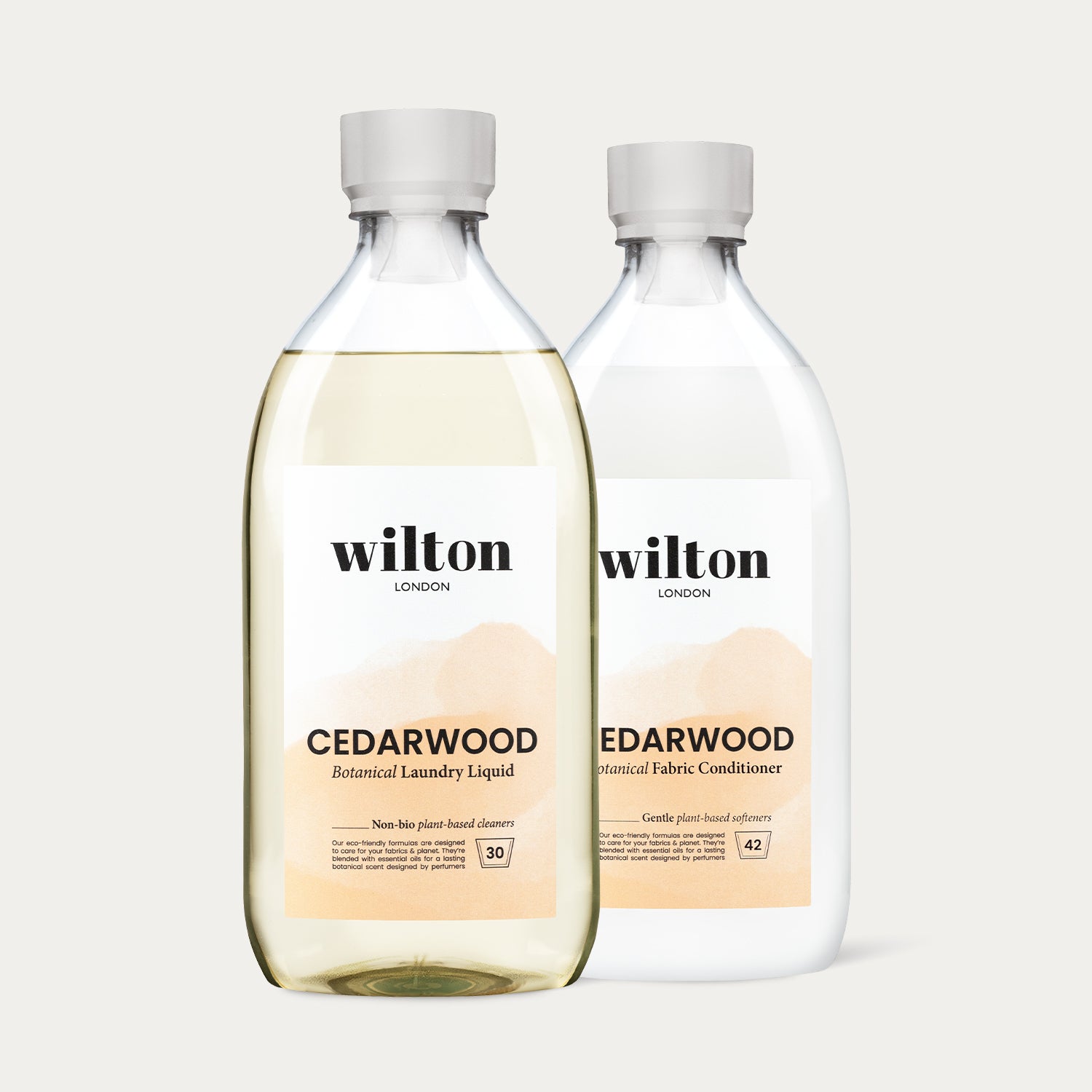
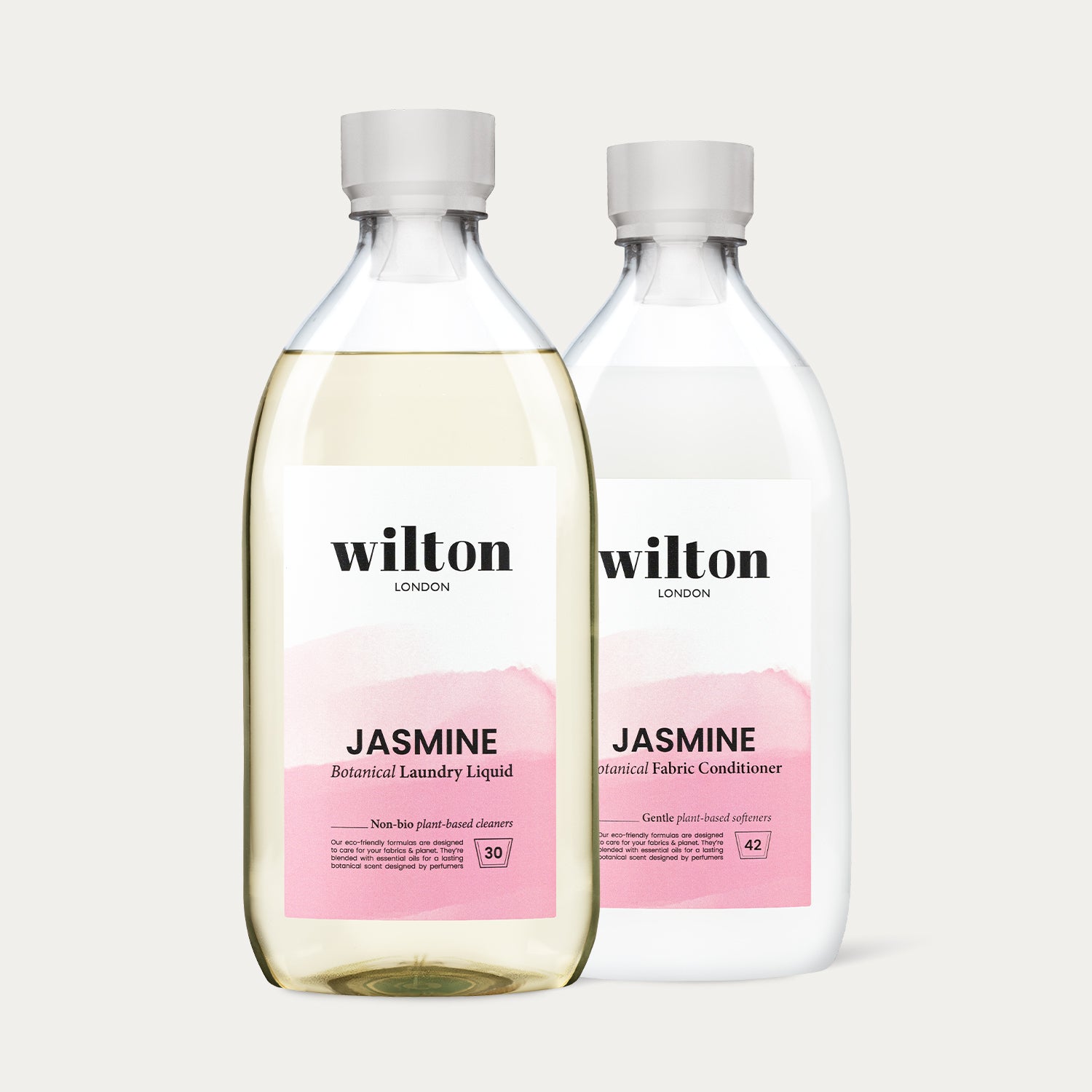
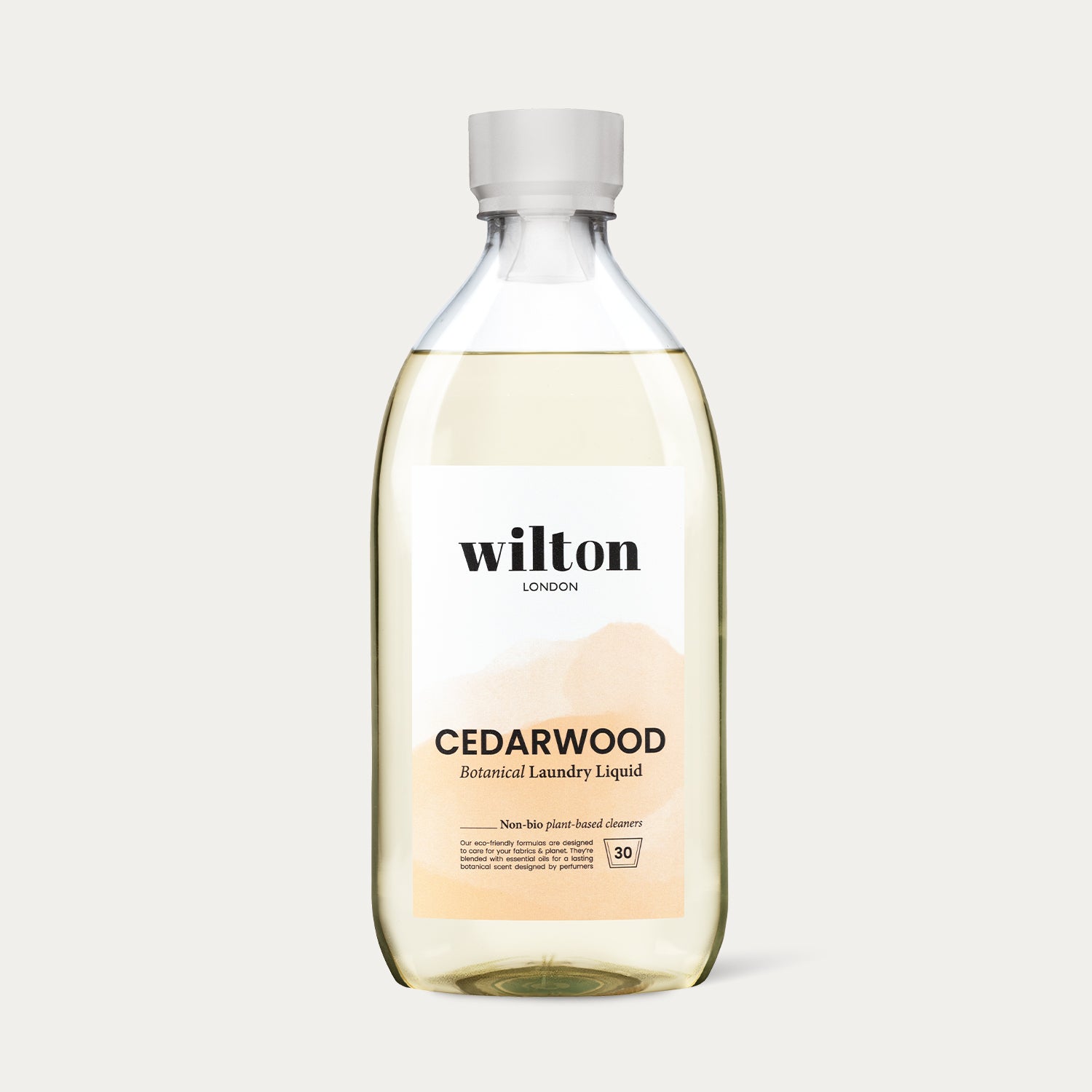
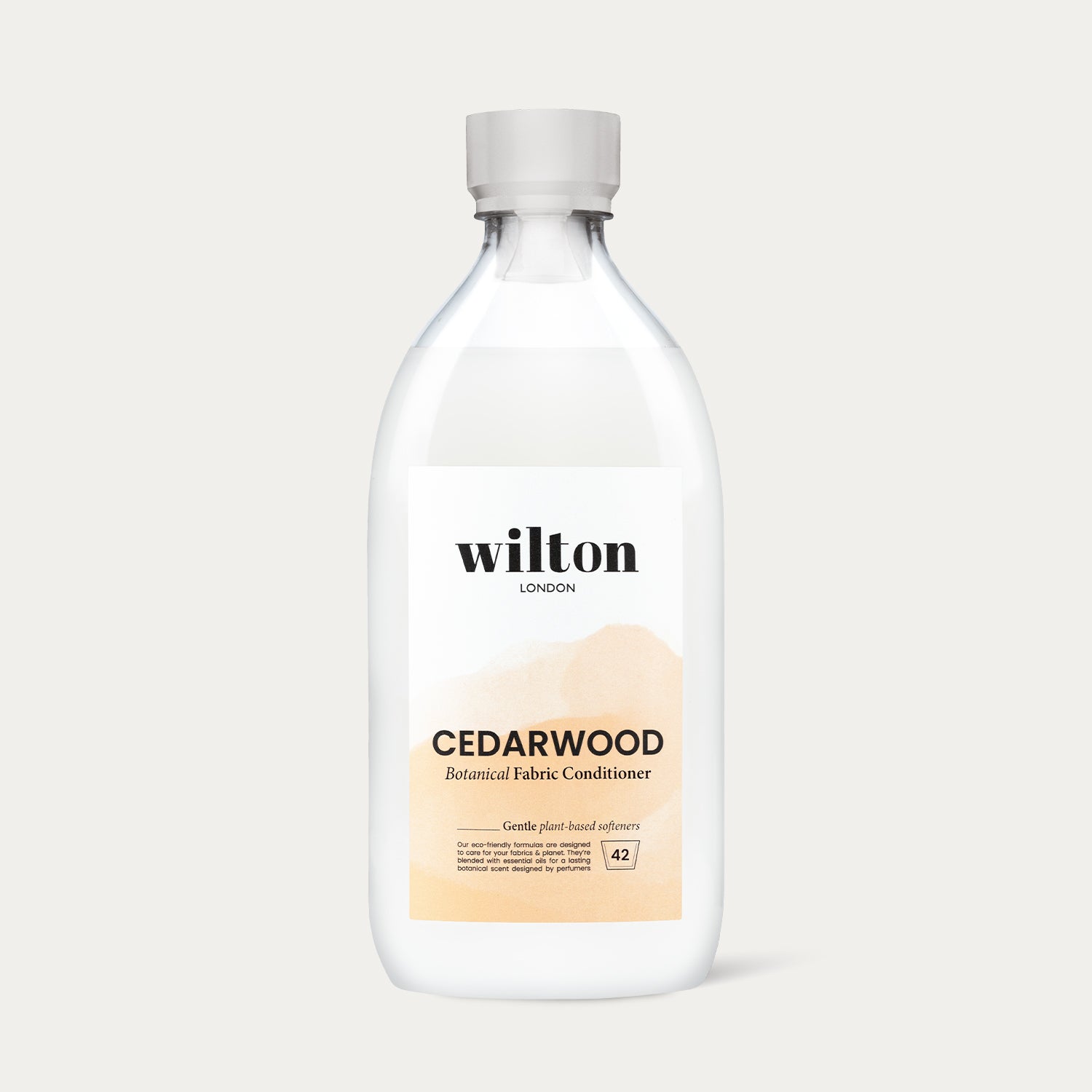
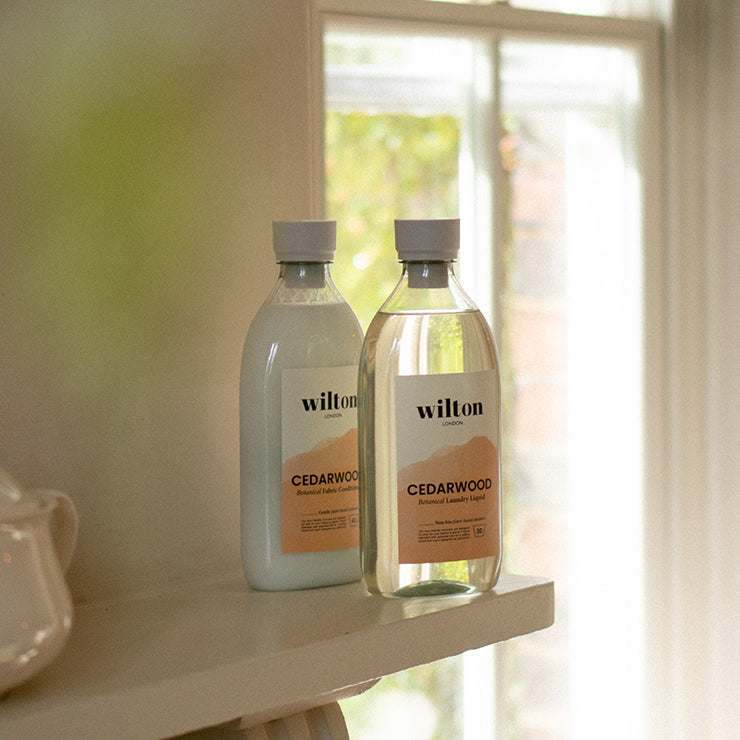
One detergent and fabric conditioner running through sheets, towels, t-shirts, throws. This is the constant. Pick one scent family — woody, floral, aromatic, resinous — and stay with it for at least a month. Switching every wash is what makes a house smell muddled. At Wilton, Cedarwood is where most people start: warm, woody, slightly spiced, sits well under almost anything else.
Heart layer — candles, diffusers, room mists
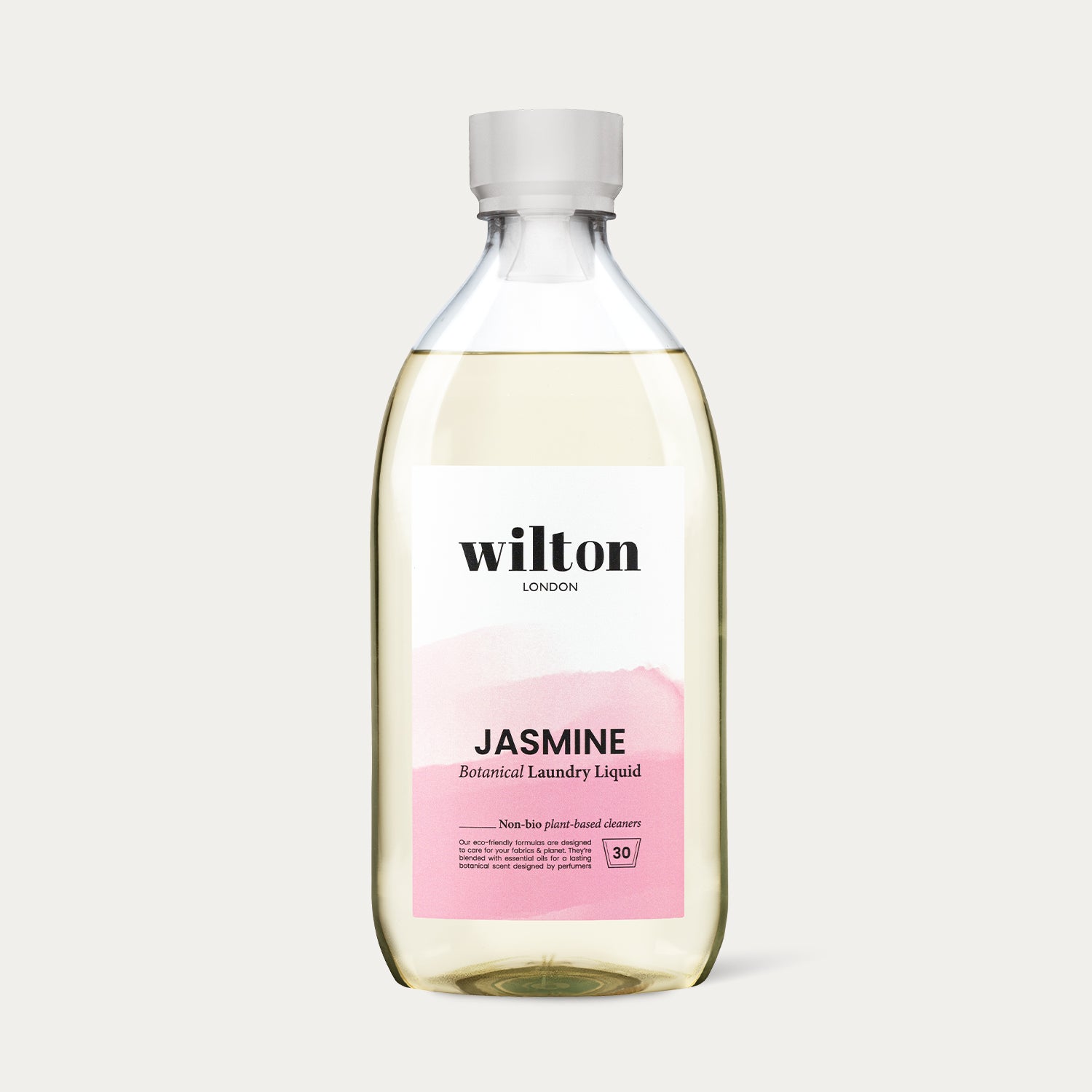
The mood layer. Lit when you sit down for an evening, working away quietly in the background of a room. Pick something that shares a note with your laundry. If you wash in Cedarwood, a sandalwood or cedar candle layers beautifully. If Jasmine is your base, look for something floral with a clean musk underneath. The two should feel like the same family, not the same scent.
Top layer — linen sprays, perfume, body oils
The lift. Sharp, short-lived, used before guests arrive, before bed, before you leave the house. Citrus, neroli, green notes, light florals. This is where you can play and switch things up — top notes evaporate fast, so a mismatch here matters less than at the base.
Which Wilton scents layer well with which perfumes?
If you already have a signature perfume, here's how to choose a laundry scent that works underneath it rather than fighting it.
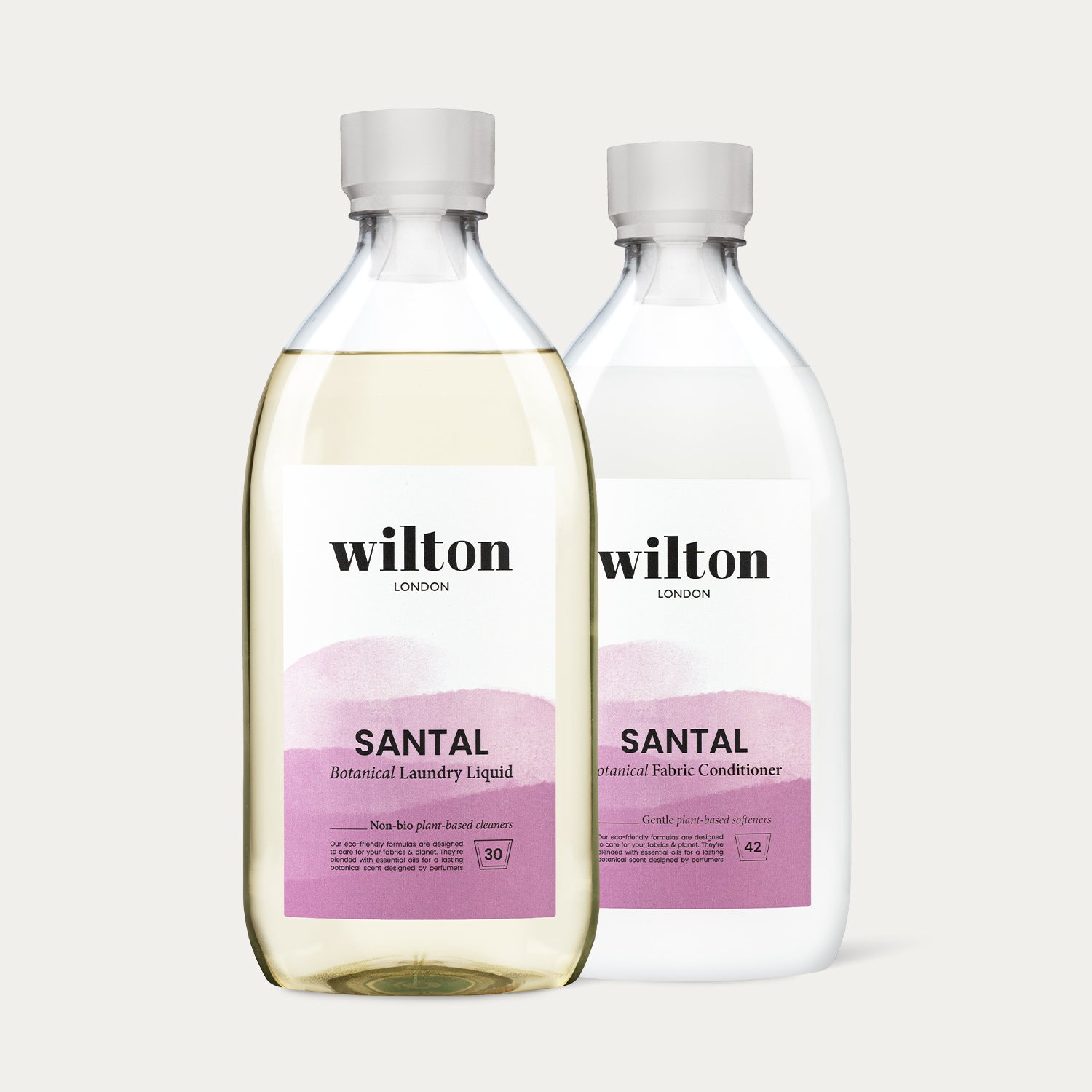
If you wear woody, smoky, or amber perfumes (Le Labo Santal 33, Tom Ford Oud Wood, Maison Francis Kurkdjian Oud Satin Mood) — go Cedarwood or Santal. Same family, builds depth, makes the perfume linger longer because the base notes harmonise.
If you wear bright florals or citrus (Chanel Chance, Diptyque Eau Rose, Jo Malone Wood Sage & Sea Salt) — go Jasmine. Floral underneath a floral perfume reads coherent rather than competing.
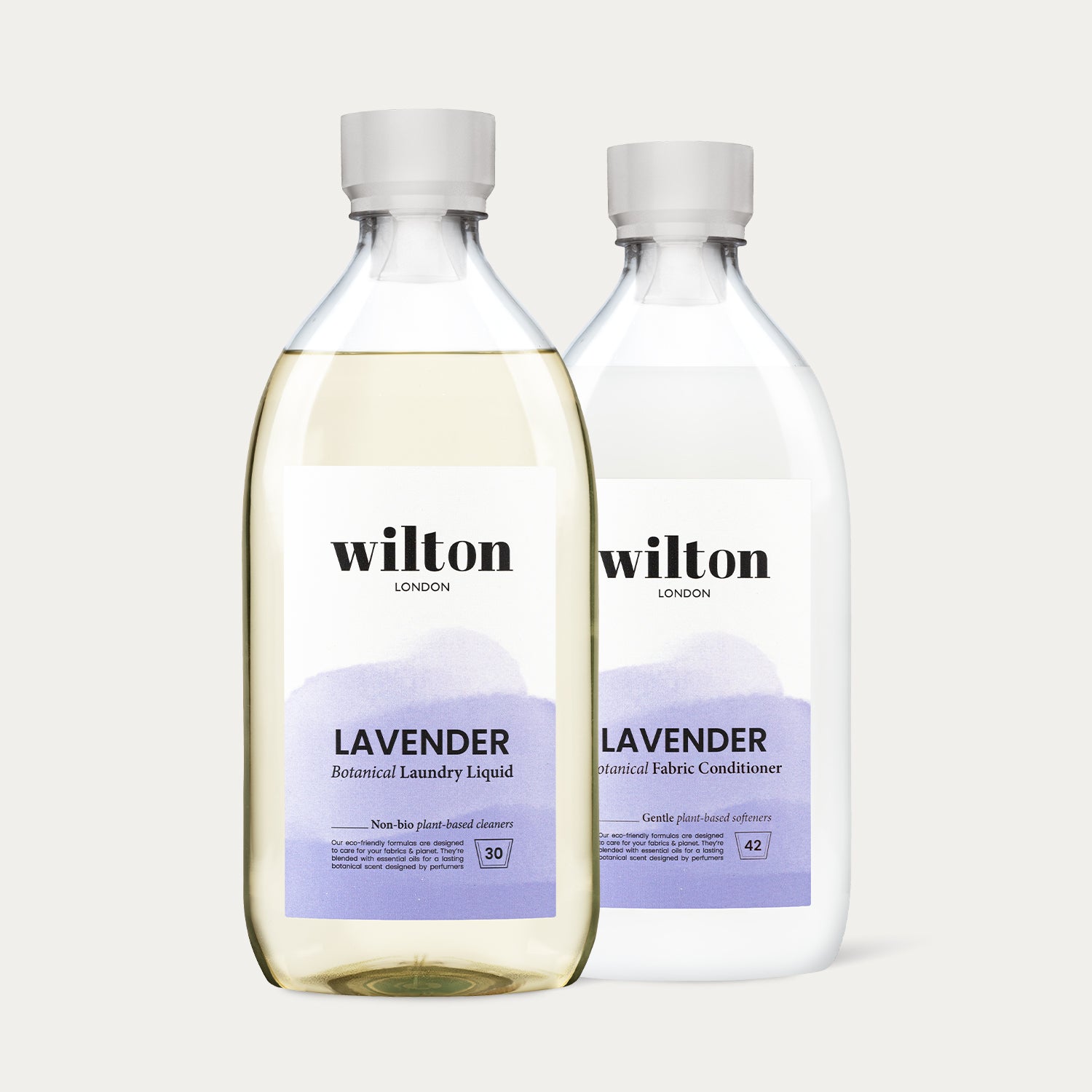
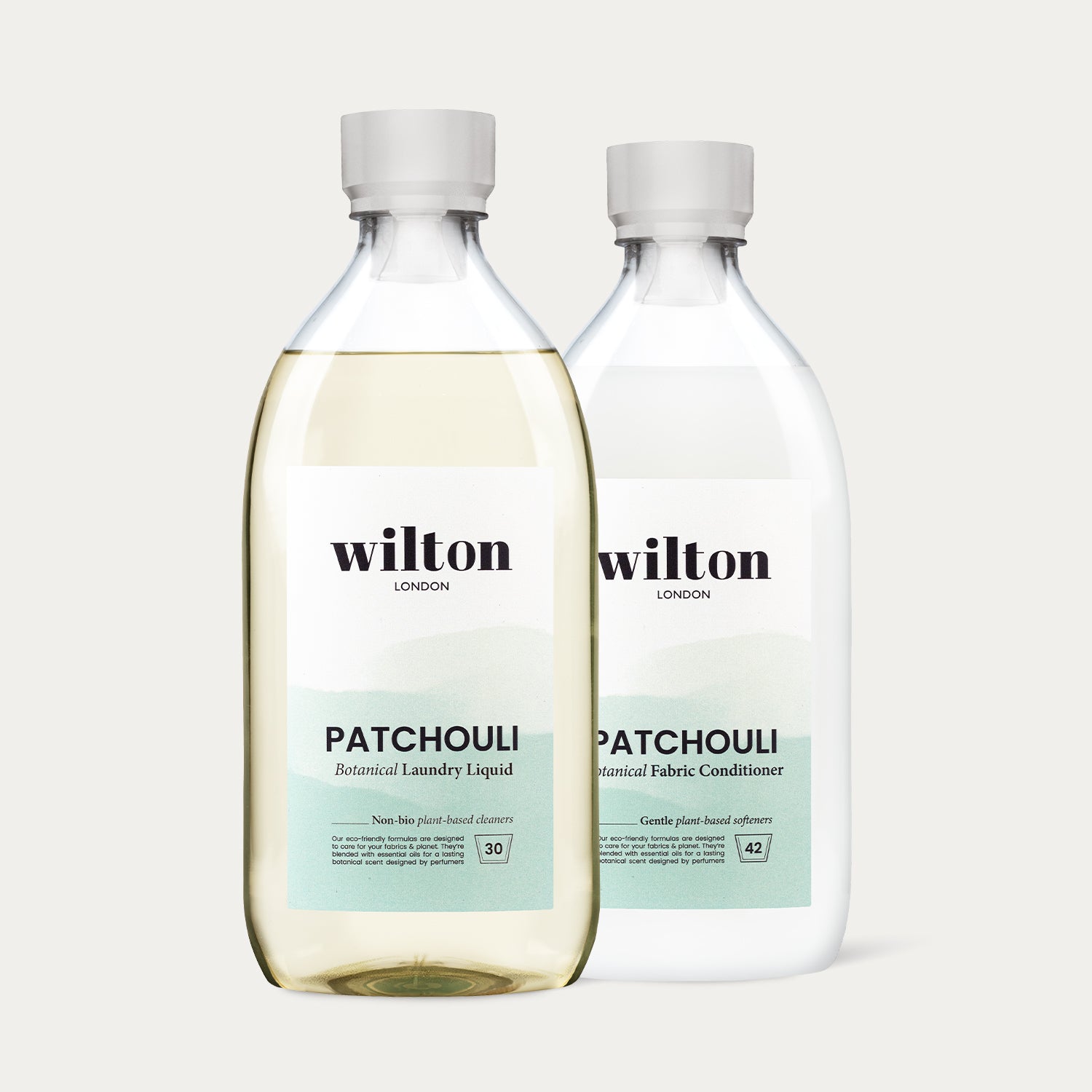
If you wear modern, clean, or aromatic perfumes (Le Labo Bergamote 22, Aesop Hwyl, Maison Margiela Lazy Sunday Morning) — go Lavender or Patchouli. Both add a quiet, expensive base without sweetening anything.
If you don't wear a signature perfume — go Cedarwood. It's our hero for a reason. It plays well with almost anything you might add to it later, including no perfume at all.
How long does laundry fragrance actually last?
Laundry fragrance lasts longer than people expect. A properly formulated detergent and fabric conditioner combination releases fragrance gradually as fabric dries, then continues releasing it for one to two weeks as the textiles move and warm against your skin. Fabric conditioner is where most of the longevity comes from — it deposits fragrance on the surface of the fibres rather than just rinsing through them, which is what extends the smell from a few hours to a fortnight.
If you're using only detergent and skipping fabric conditioner, you're getting maybe a quarter of the longevity available to you. This is the single biggest lever in any home fragrance wardrobe.
A simple way in
The fastest way to find your base layer is to take our scent quiz — ninety seconds, surprisingly accurate. Or pick the Wilton scent family closest to a perfume you already love, and run it through your laundry for a month. Sheets, towels, t-shirts, throws. Don't add anything else for the first few weeks. See what it does to the house.
The bit nobody tells you about scent stacking is that you don't have to add anything. Most people are already over-stacking — candle, room spray, perfume, fabric softener, all from different families, fighting each other. The fix is often subtraction, not addition. Pick one family. Build it across base, heart, top. Stop there. That's how houses end up smelling considered rather than perfumed.
FAQs
What is scent stacking?
Scent stacking, also called scent layering, is the practice of combining two or more fragrances at once to create a more personalised scent. Pinterest named it a top 2026 trend. It works across perfume, body care, home fragrance, and laundry — the goal is to build a fragrance wardrobe where every element shares a common note and works together rather than competing.
Can laundry detergent really be part of a fragrance wardrobe?
Yes. Fabric is the largest scented surface in any home — bed linen alone covers several square metres of fragrance-holding fibre. A well-formulated detergent and conditioner releases scent gradually for one to two weeks. That makes laundry the longest-lasting, most consistent base note in your home fragrance setup, sitting underneath any candle, spray, or perfume you add on top.
How many fragrances should I layer at once?
Two layers is usually the sweet spot — a base note from your laundry, plus either a candle or a personal perfume. Three layers works if all three share a common note (woody, floral, citrus). More than three and you stop smelling considered and start smelling perfumed.
Will Wilton laundry scent clash with my perfume?
Only if you've picked the wrong base. Match the family — woody perfumes layer with Cedarwood or Santal, florals with Jasmine, clean aromatics with Lavender or Patchouli. The Wilton scents are designed by perfumers to behave like real fragrance bases, which means they extend rather than fight your personal scent.
What's the best Wilton scent to start with?
Cedarwood. It's our most-bought fragrance and the most universally layerable — warm, woody, slightly spiced, with enough depth to sit under almost any candle or perfume you add on top.
This post was first published in 2023 as "Fragrance Layering 101" and substantially rewritten in May 2026 to reflect current trend coverage, customer questions, and a focus on fabric as the base layer of a home fragrance wardrobe.